
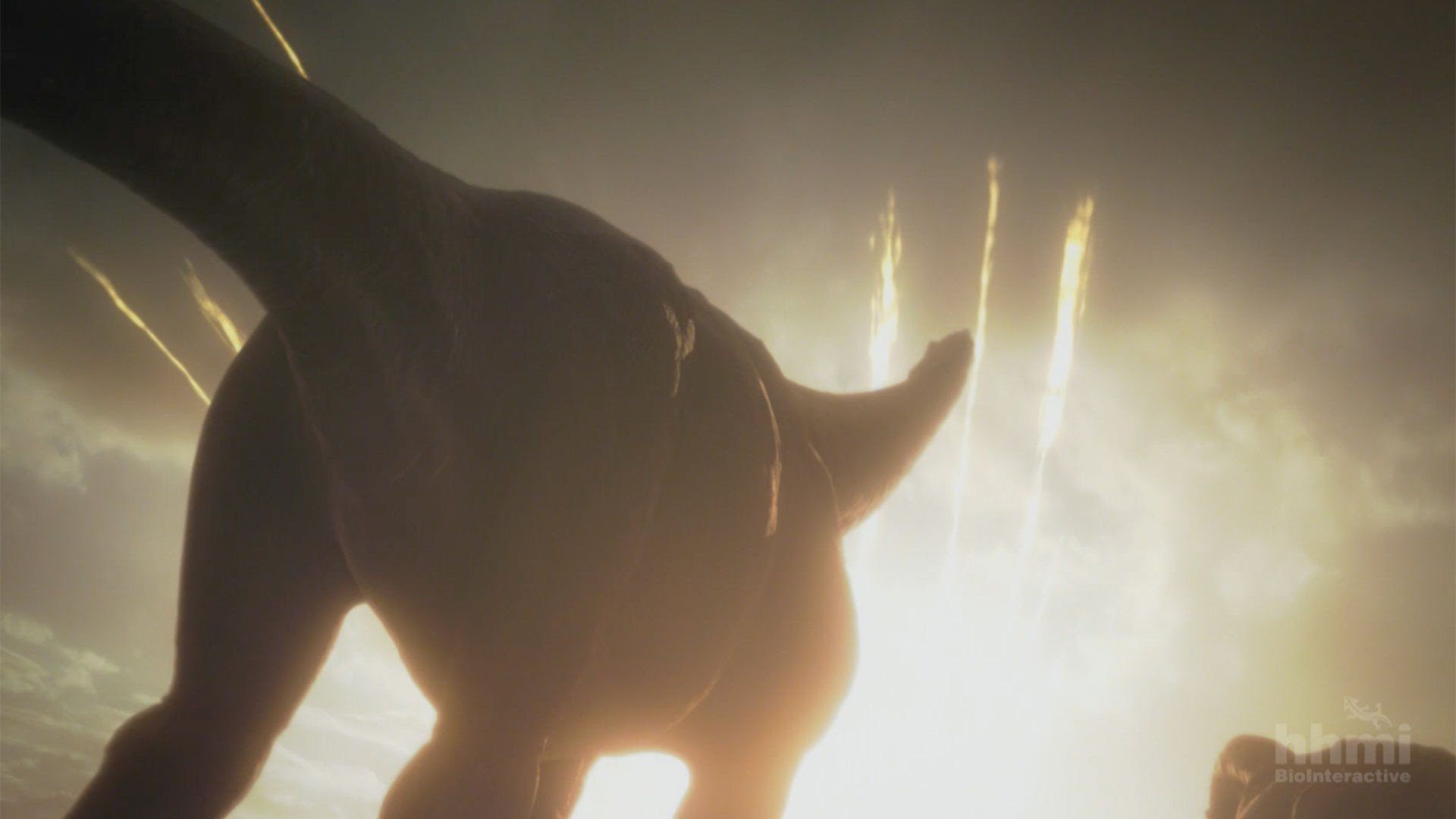
The Asteroid That Killed The Dinosaurs
Description: It is estimated that 75% of plant and animal (including dinosaur) species went extinct after the Earth was hit with a massive asteroid 66 million years ago. Evidence includes a thin layer of rock containing iridium (rarely found on Earth but common in asteroids) around the planet. Scientists have also discovered a large impact crater. The cause of the extinction is fairly clear but the details of the effects leave much to be explored.
Web Resource: Cretaceous–Paleogene extinction event - Wikipedia
Megafauna Extinction: Humans or Climate?
Description: North America (like Africa today) was once covered with large megafauna (animals weighing more than 100 pounds). This included giant mammoths, ground sloths, and beavers the size of a large bear. However most of these animals disappeared by 11,000 years ago. What was the cause of this extinction? Humans, climate, or a combination of the two? Phenomenon like this can be found around the World and can introduce the idea of human impacts on the environment.
Web Resource: What Killed the Great Beasts of North America?
