
Burning Steel Wool
Description: This is an excellent phenomenon to discuss chemical reactions and the conservation of mass. Steel wool is burned leading to an increase in mass. When doing this in class show the students the burning steel wool to begin with and have them predict the change in mass. Most students believe the mass will either increase or decrease. This phenomenon can be used at the beginning of a unit on chemical reactions and students can investigate their individual models. (e.g. mass comes from fire, oxygen, carbon, etc.)
Web Resources: Combustion of Iron Wool - CFNS Experiment 36


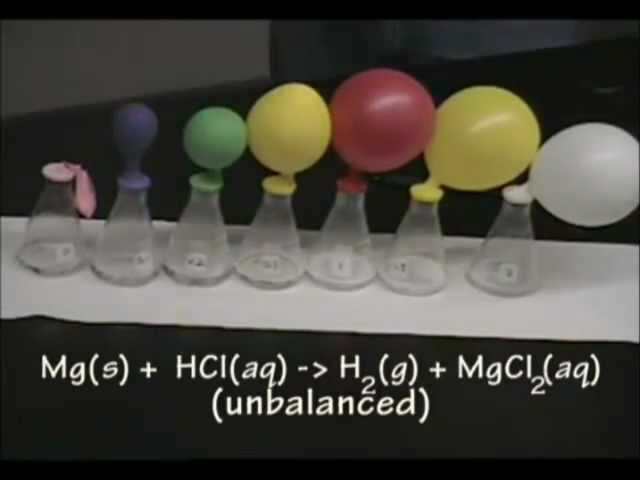
Limiting Reactant
Description: In this phenomenon both magnesium metal and hydrochloric acid are limiting reactants. I have used this in a chemistry class, framing it as "The Case of the Mixed Up Masses". I tell them that I added varying amounts of magnesium metal but I forgot to label the flasks. If done correctly they should get the curve seen below. I learned about this on the NSTA Resource page.
Web Resource: NSTA Stoichiometry Balloon Race