
Indestructible Coating - Polyurea
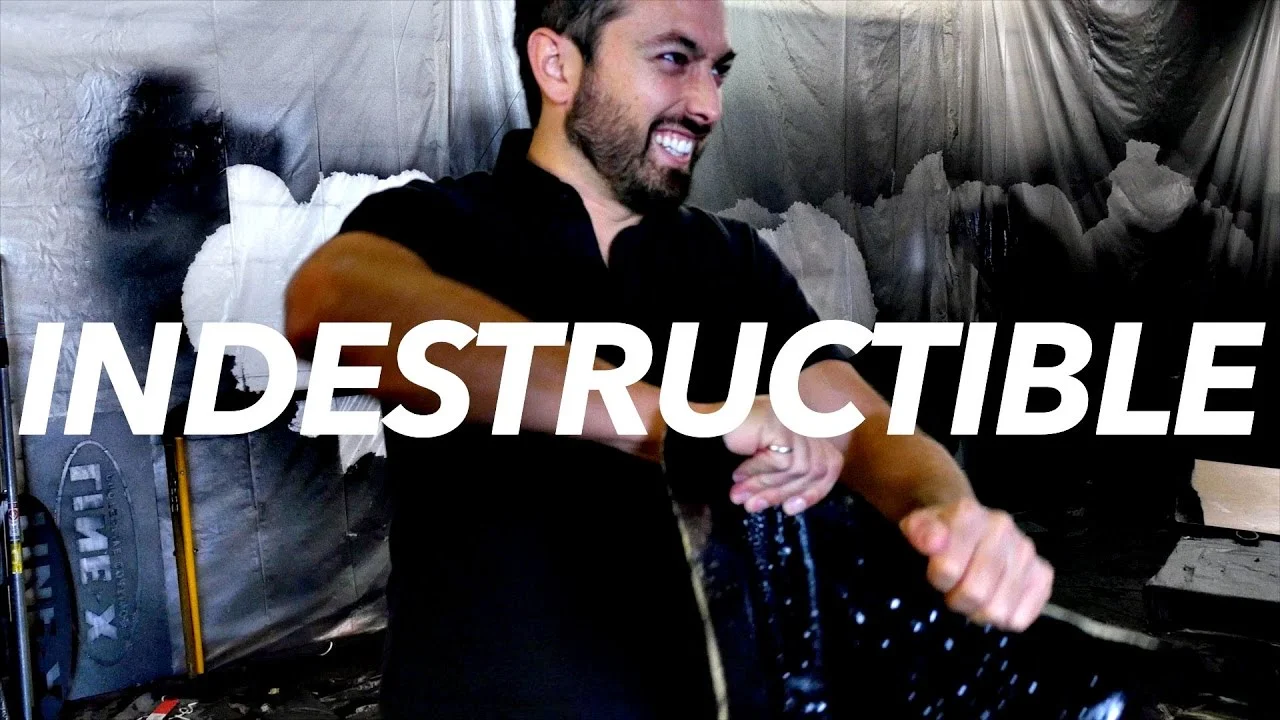
Description: In this video a watermelon is covered with a polymer and survives a drop from a large tower. The polymer is formed when two reactants join to make a flexible and durable polymer known as a polyurea. The chemical reaction is exothermic, releasing heat as the reactants combine. This phenomenon could be used in a unit on chemical reactions, extended structures or chemical engineering. The company Line-X uses this polymer to make bed liners for pickup trucks.
Web Resources: Polyurea - Wikipedia, Line-X
Reaction in a Bag
Description: This video shows a chemical reaction of sodium bicarbonate (baking soda), calcium chloride (road salt), and an indicator phenol red. The chemicals react to form calcium carbonate, sodium chloride, and carbon dioxide gas. This changes the pH inside the bag resulting in a color change in the phenol red. As much air as possible should be removed from the bag as possible to show the production of the gas. This could be used as an example of chemical reaction that releases energy (exothermic). Since the bag is sealed it could be massed before and after to show the conservation of mass (atoms). This phenomenon was submitted by Brian Babulic.
Web Resources: Reaction in a Bag - Flinn Scientific, American Chemical Society - Explanation

Reusable Heat Packs
Description: This phenomenon uses a supersaturated solution of sodium acetate. Clicking the metal disc releases a small number of crystals of sodium acetate which act as nucleation sites for the crystallization of the sodium acetate into a hydrated salt. Energy is released from the crystal lattice. The heating pack can be placed in boiling water and the sodium acetate can be dissolved again. This phenomenon shows how bond energy can be released. It also shows the importance of chemical engineering and could lead to a section where students design a device (or application) of their own.
Web Resource: Chemical Heat Pack - Wikipedia, Snappy Heat - Amazon
