

Programmable Droplets from MIT
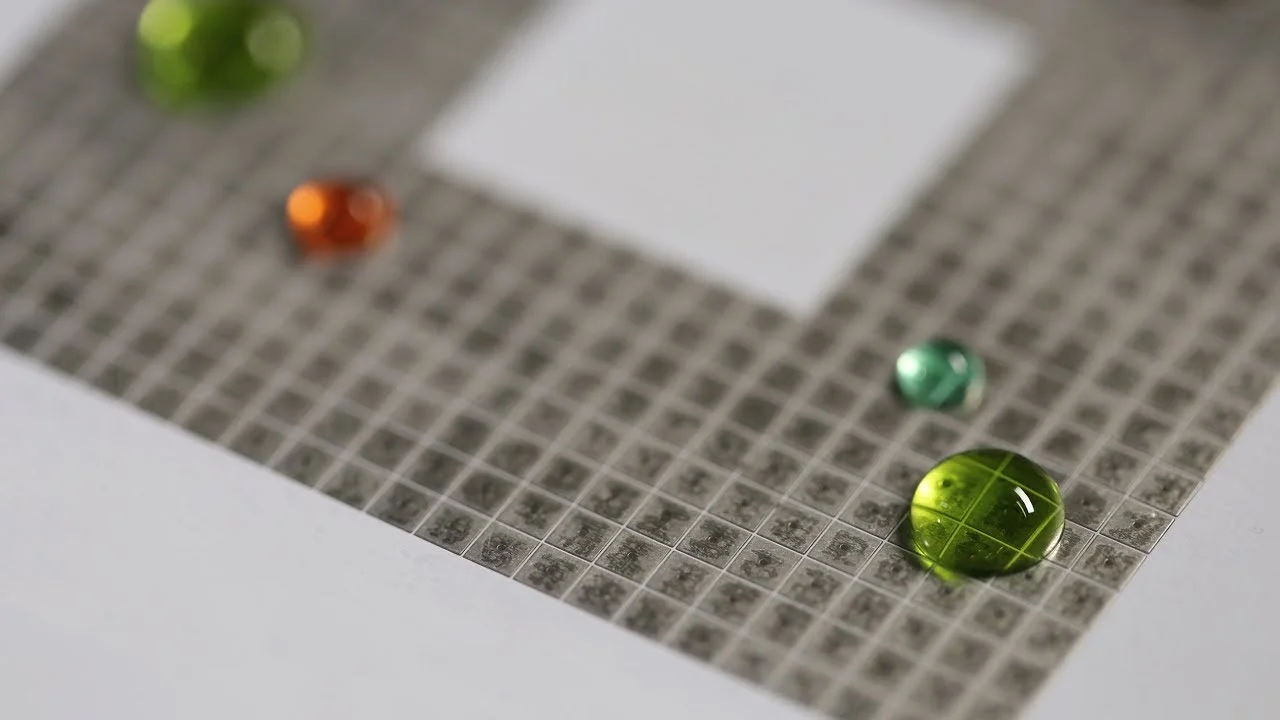
Description: Researchers from MIT have developed a technique for moving droplets of fluid around using electric fields. This could allow biological tests and research (which normally use pumps) to move micro amounts of fluid around more economically. This design solution could be used as an anchoring or supporting phenomenon around electric charge, electromagnetic fields, and Coulomb's Law.
Web Resource: Programmable droplets - MIT News
Candle-Powered Car
Description: The candle-powered car is an application of the Seebeck Effect. This effect is the result of thermal energy conversion directly into electricity. This phenomenon can be used in elementary school to show energy conversion from heat to electricity to the kinetic energy of the car. A more detailed explanation will be required in high school related to electron response to temperature differences in different materials. The Seeback circuit used in this candle-powered car can also be connected to a voltmeter and used as a temperature sensing thermocouple.
Web Resource: Seebeck Effect, Candle Car Kit - Amazon

Programmable Magnets
Description: Programmable magnets are engineered to have multiple magnetic regions. This allows engineers to build magnets that concentrate force, align spatially, or both attract and repel. Students can design simple solutions to human problems that use this cutting-edge technology.
Web Resource: Programmable Magnets - Wikipedia


Magnetic Slime
Description: Students can create magnetic slime using iron filings. A powerful magnet can move and be consumed by the slime.
Web Resource: How to Make Magnetic Slime

Magnetic Cannon
Description: The magnetic cannon contains four spaced neodymium magnets in a channel. Two balls bearings are placed between each ball bearing. When a new ball bearing is introduced a transfer of energy occurs and the final ball bearing leaves with a higher initial velocity than the first. This is a great phenomenon for studying transfer of momentum and the energy of an object based on its position within a magnetic field.
Web Resource: Magnetic Challenge with Bozeman Science
