
PS3.D: Energy in Chemical Processes and Everyday Life

In this video Paul Andersen explains how energy is used in chemical processes and everyday life. Students should understand that energy is neither created or destroyed but is converted. Most of the energy is delivered to our planet from the sun and is harvested through the process of photosynthesis. A K-12 teaching progression is also included.
ESS1.A: The Universe and Its Stars

Paul Andersen describes our place on the Earth in the Solar System within the Milky Way Galaxy in the Universe. The make-up and origins of the Universe are included along with stellar evolution. A teaching progression K-12 is also included.
CCC3: Scale, Proportion, and Quantity
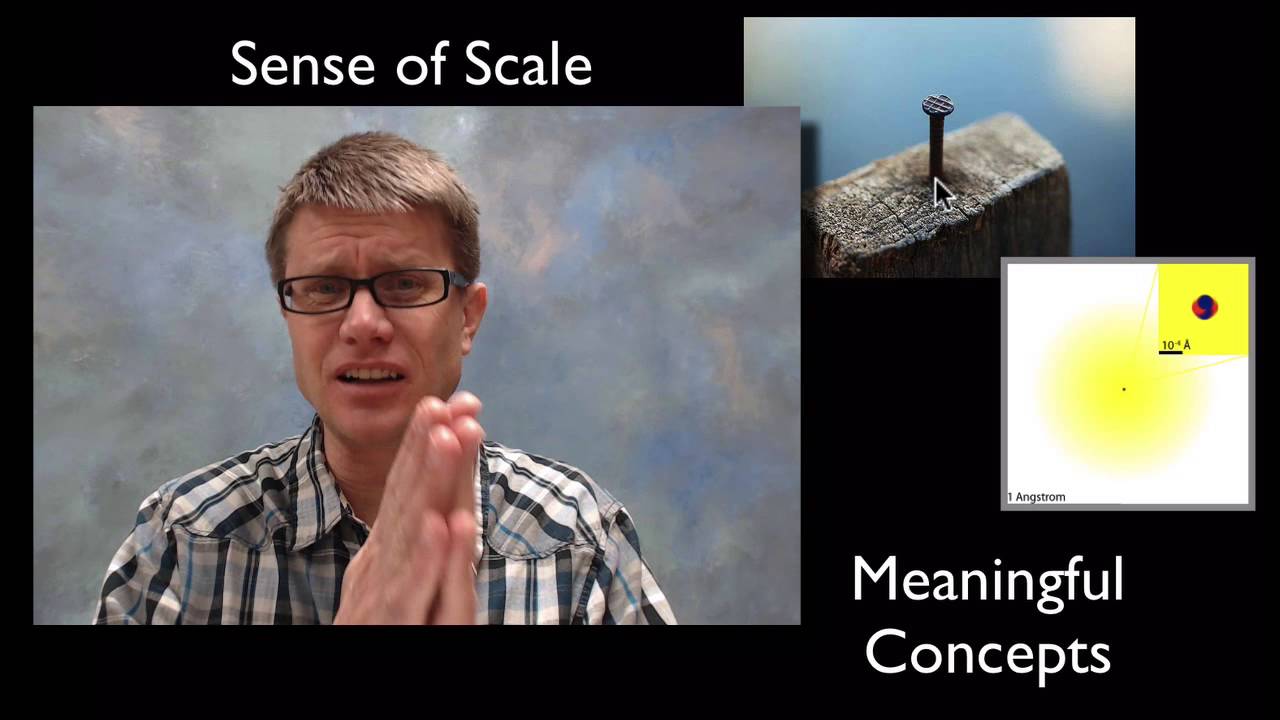
In this video Paul Andersen explains the importance of scale in science and engineering. The Universe varies in size along three scales: size, timespan, and energy. Many phenomenon are too small and fast, or two large and slow to observe. We use the tools of proportion and units of measure to comprehend different scales. The video ends with a progression of instruction from K-12
SEP2: Developing and Using Models

Paul Andersen explains the importance of modeling in science and engineering. Models are used by scientists to explain phenomenon. Unlike mental models, conceptual models can be shared by all scientists to improve our understanding of the Universe. Engineers use models study systems and test designs.