
Paul Andersen Paul Andersen

PS3.C: Relationship Between Energy and Forces
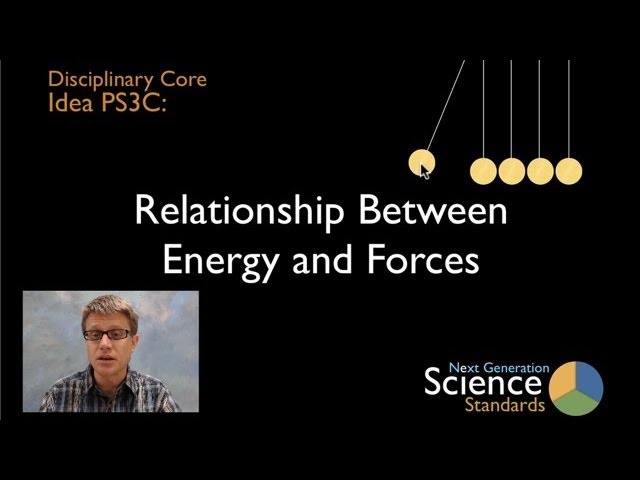
In this video Paul Andersen describes the relationship between energy and forces. When objects are directly touching electromagnetic forces can result in forces and energy exchange. When objects are not directly touching fields; gravitational, magnetic, and electric result in forces and energy and exchange. A teaching progression K-12 is also included.
 
PS3C.jpg

In this video Paul Andersen describes the relationship between energy and forces.  When objects are directly touching electromagnetic forces can result in forces and energy exchange.  When objects are not directly touching fields; gravitational, magnetic, and electric result in forces and energy and exchange.  A teaching progression K-12 is also included.

Read More
Paul Andersen Paul Andersen

CCC2: Cause and Effect

Crosscutting Concept 2: Cause and Effect - Mechanisms and Explanation In this video Paul Andersen explains cause and effect its importance in science and engineering. He starts by addressing the chain of interactions that must be present to show cause and effect. He addresses the assumptions of universality and scale in determining cause and effect.
 

In this video Paul Andersen explains cause and effect its importance in science and engineering.  He starts by addressing the chain of interactions that must be present to show cause and effect.  He addresses the assumptions of universality and scale in determining cause and effect.  He finished the video with a progression of instruction from K-12.
 

Read More
Paul Andersen Paul Andersen

SEP2: Developing and Using Models

Science and Engineering Practice 2: Developing and Using Models Paul Andersen explains the importance of modeling in science and engineering. Models are used by scientists to explain phenomenon. Unlike mental models, conceptual models can be shared by all scientists to improve our understanding of the Universe. Engineers use models study systems and test designs.
 
Practice 2.jpg

Paul Andersen explains the importance of modeling in science and engineering.  Models are used by scientists to explain phenomenon.  Unlike mental models, conceptual models can be shared by all scientists to improve our understanding of the Universe.  Engineers use models study systems and test designs.

Read More