
PS3.D: Energy in Chemical Processes and Everyday Life

In this video Paul Andersen explains how energy is used in chemical processes and everyday life. Students should understand that energy is neither created or destroyed but is converted. Most of the energy is delivered to our planet from the sun and is harvested through the process of photosynthesis. A K-12 teaching progression is also included.
LS1.C: Organization for Matter and Energy Flow in Organisms
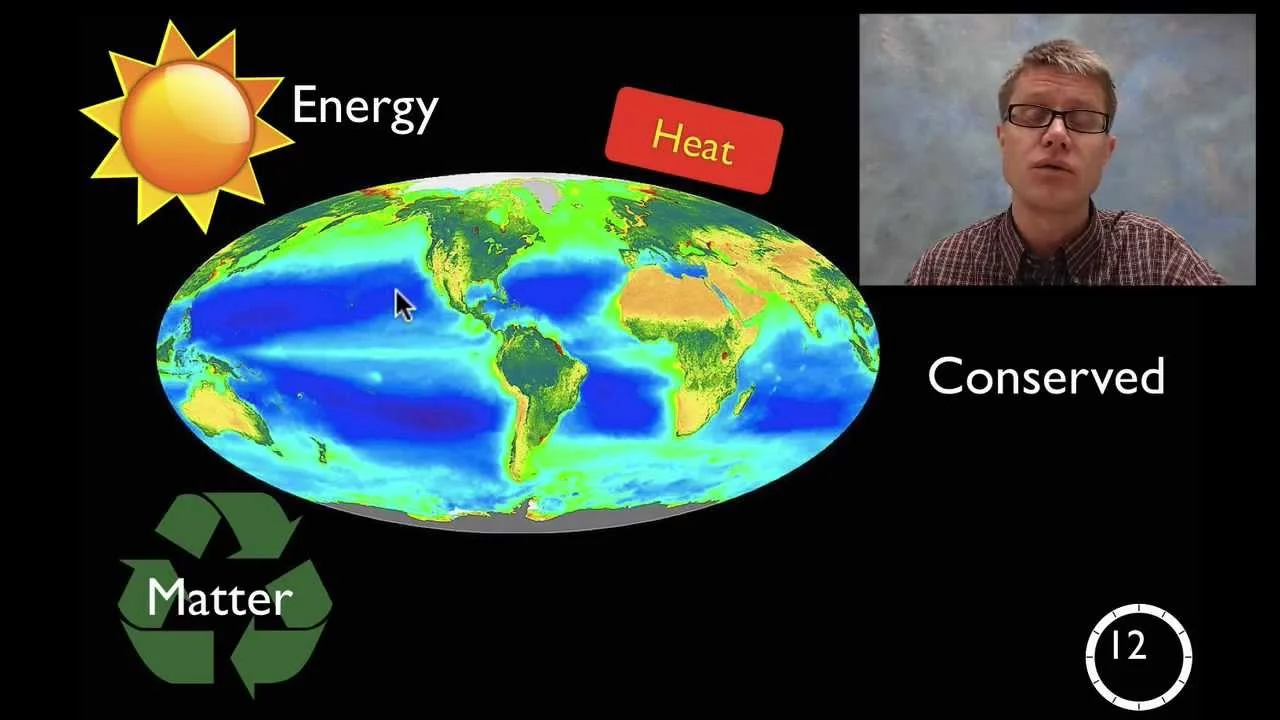
Sustaining life requires substantial energy and matter inputs. The complex struc- tural organization of organisms accommodates the capture, transformation, trans- port, release, and elimination of the matter and energy needed to sustain them.
As matter and energy flow through different organizational levels—cells, tissues, organs, organisms, populations, communities, and ecosystems—of living systems, chemical elements are recombined in different ways to form different products. The result of these chemical reactions is that energy is transferred from one system of interacting molecules to another.
CCC5: Matter and Energy
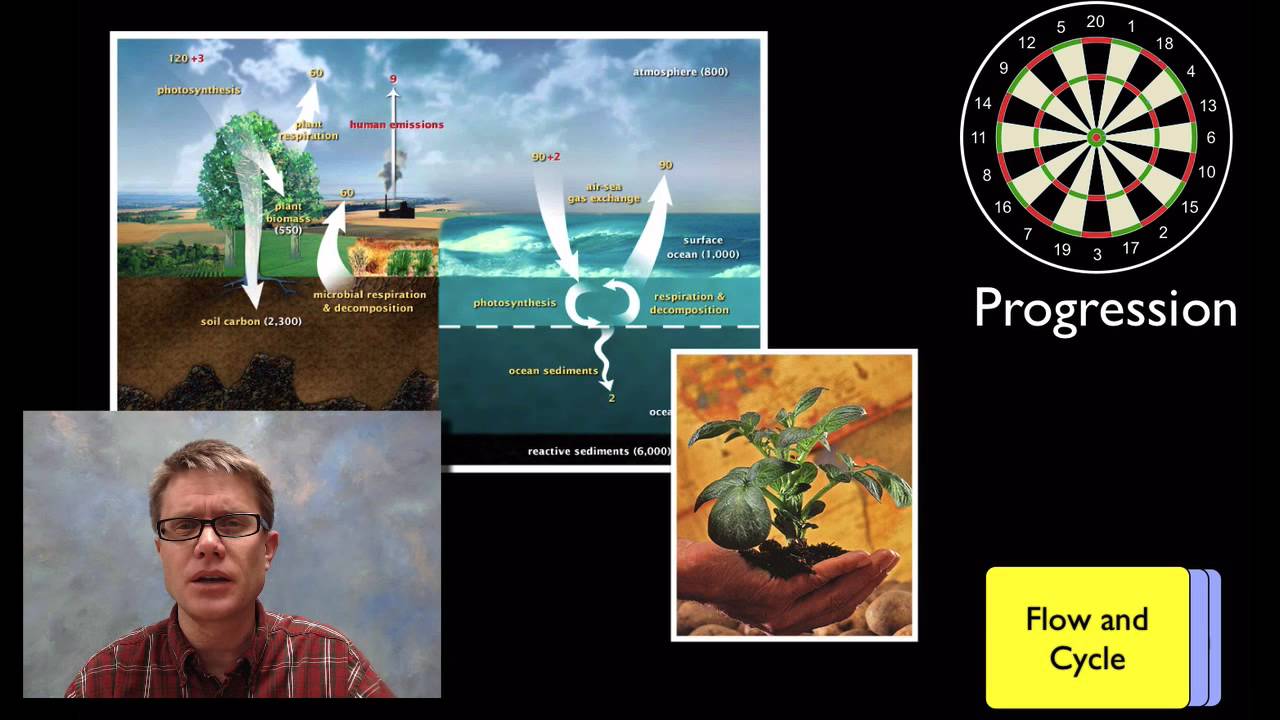
In this video Paul Andersen explains how matter and energy flow and cycle through systems. He starts by explaining how energy and matter input and output will always be conserved. He addresses the many misconceptions surround energy and matter including the belief that food contains energy. He explains how nuclear reactions conserve both batter and energy. The video ends with a teaching progression for grades K-12.
SEP2: Developing and Using Models

Paul Andersen explains the importance of modeling in science and engineering. Models are used by scientists to explain phenomenon. Unlike mental models, conceptual models can be shared by all scientists to improve our understanding of the Universe. Engineers use models study systems and test designs.