Paul Andersen Paul Andersen

LS3.B: Variation of Traits
In this video Paul Andersen explains how variation is created in a population over time. Variation in offspring is caused by genetic recombination, mutations and environmental effects. Parental DNA is recombined using the process of meiosis. Mutations can add novel genes to a population and the environment can shape the expression of genes.
 
LS3B.jpg

In this video Paul Andersen explains how variation is created in a population over time.  Variation in offspring is caused by genetic recombination, mutations and environmental effects.  Parental DNA is recombined using the process of meiosis.  Mutations can add novel genes to a population and the environment can shape the expression of genes.  A K-12 teaching progression is also included.

Read More
Paul Andersen Paul Andersen

LS3.A: Inheritance of Traits

In this video Paul Andersen explains the importance of DNA is organisms. DNA contains the blueprint for each organisms. The DNA codes for the mRNA which creates proteins. The DNA also is the unit of inheritance which is passed from generation to generation. A K-12 teaching progression is also included.
 
LS3A.jpg

In this video Paul Andersen explains the importance of DNA is organisms.  DNA contains the blueprint for each organisms.  The DNA codes for the mRNA which creates proteins.  The DNA also is the unit of inheritance which is passed from generation to generation.  A K-12 teaching progression is also included.
 

Read More
Paul Andersen Paul Andersen

CCC1: Patterns

Crosscutting Concept 1: Patterns Paul Andersen explains patterns and describes why pattern recognition is an important skill in science and engineering. He begins by discussing patterns in nature, including snowflakes, flower petals, seasons and nucleotides in DNA. He then illustrates the importance of classification in describing and eventually understanding patterns.
 

Paul Andersen explains patterns and describes why pattern recognition is an important skill in science and engineering.  He begins by discussing patterns in nature, including snowflakes, flower petals, seasons and nucleotides in DNA.  He then illustrates the importance of classification in describing and eventually understanding patterns.  He gives a progression instruction in the science classroom from grade K to 12.  A secret pattern is hidden within the video.

Read More
Paul Andersen Paul Andersen

SEP4: Analyzing and Interpreting Data

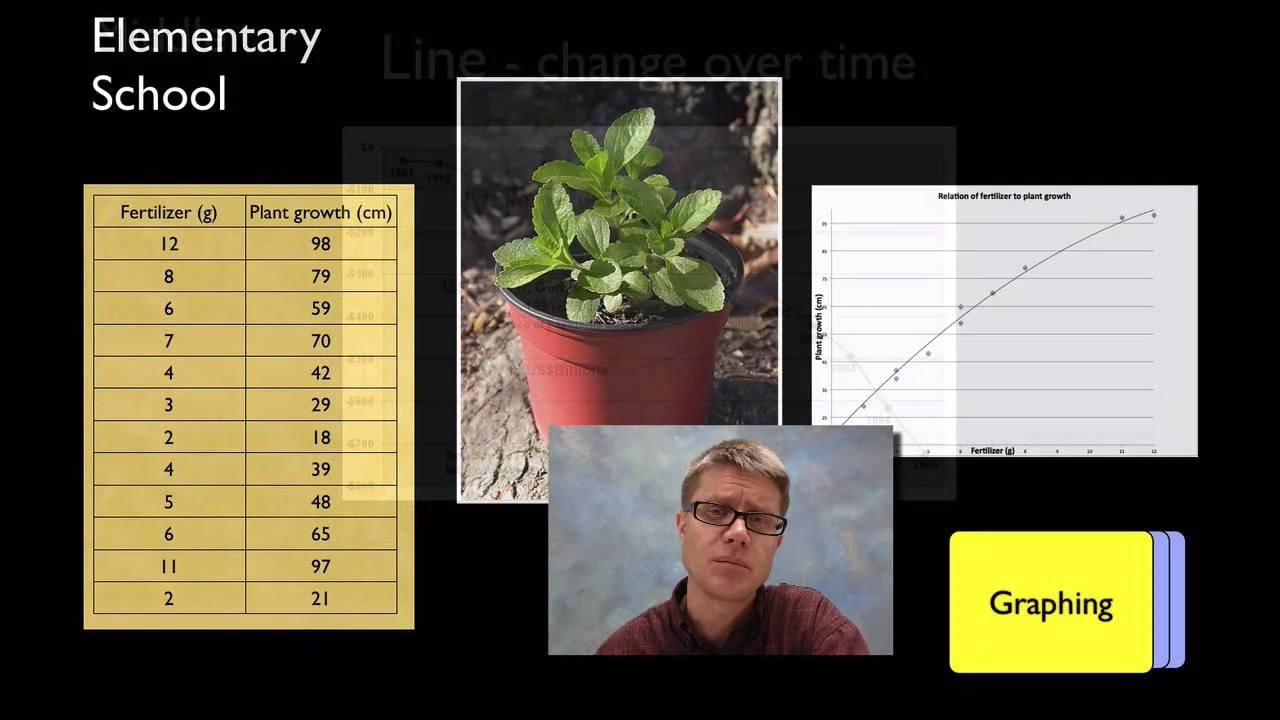
Science and Engineering Practice 3: Analyzing and Interpreting Data Paul Andersen explains how scientists analyze and interpret data. Data can be organized in a table and displayed using a graph. Students should learn how to present and evaluate data.
 
Practice 4.jpg

Paul Andersen explains how scientists analyze and interpret data.  Data can be organized in a table and displayed using a graph.  Students should learn how to present and evaluate data.

Read More